In the vast universe of gaming, choosing the right PC can feel like navigating a maze designed by a particularly mischievous goblin. With countless options and specs that might as well be written in ancient runes, it’s easy to get overwhelmed. But fear not, fellow gamer! Whether you’re a casual player or a battle-hardened pro, finding the perfect gaming rig doesn’t have to be a quest for the ages.
Overview of Gaming PCs
Gaming PCs vary significantly in specifications and performance capabilities. Key components, such as the CPU, GPU, RAM, and storage, define a system’s performance during gaming sessions. Enthusiasts often seek high-end processors, like Intel Core i7 or AMD Ryzen 7, for smooth gameplay and efficient multitasking.
GPU selection remains critical for graphical performance. Popular options include NVIDIA GeForce RTX 30 series and AMD Radeon RX 6000 series, which deliver impressive visuals and frame rates. A minimum of 16 GB RAM is advisable for modern gaming, ensuring efficient processing and quick load times.
Storage choices also affect performance. Solid-State Drives (SSDs) provide faster load times and improved overall system responsiveness compared to traditional Hard Disk Drives (HDDs). Many gamers opt for a combination of both, using SSDs for faster access to games and HDDs for additional storage of larger files.
Consideration of the cooling system is essential, too. Effective cooling solutions, such as liquid cooling or high-performance air cooling, prevent CPU and GPU overheating during intense gaming sessions. A well-cooled system maintains performance and prolongs hardware longevity.
Budget plays a significant role in selection. Higher-end gaming PCs can reach costs of $2000 or more, while entry-level systems can be found for around $500. It’s important to match the budget with gaming requirements and desired performance levels.
Ultimately, understanding specific gaming needs helps guide the decision-making process. Researching components and comparing different models assists in selecting the best system for individual preferences and gaming habits.
Factors to Consider When Buying a Gaming PC
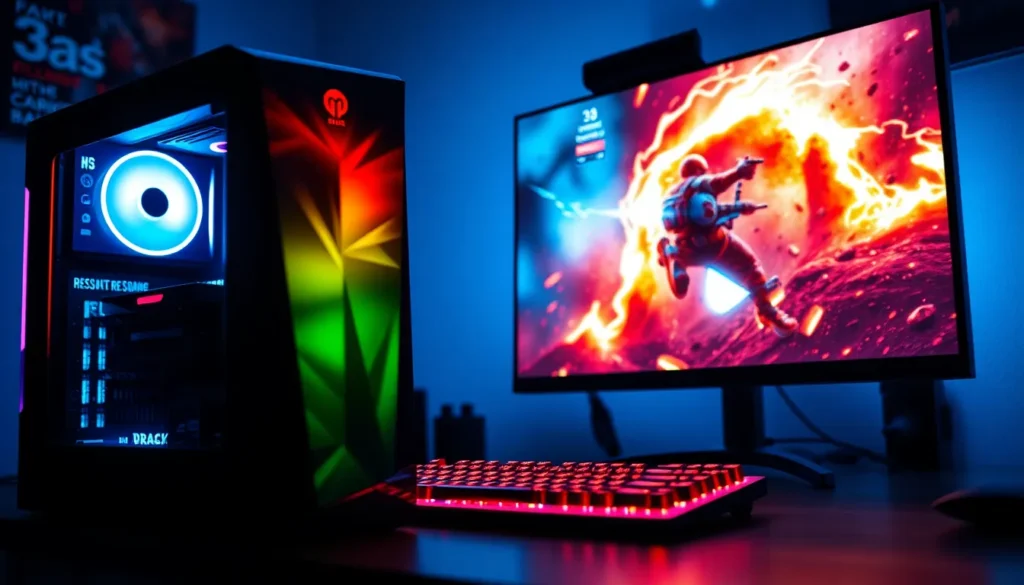
Selecting a gaming PC involves various critical factors that can significantly impact user experience. Understanding these considerations helps users make informed decisions tailored to their gaming needs.
Budget Considerations
Establishing a budget sets the foundation for selecting a gaming PC. Systems priced over $2000 offer high-end performance, while entry-level options around $500 provide decent capabilities for casual gamers. Allocating funds wisely allows users to balance necessary features against their financial constraints. The overall investment often reflects performance quality, so assessing how much users wish to spend can help narrow down their options effectively.
Performance Specifications
Prioritizing performance specifications is vital in ensuring smooth gameplay. Users often look for high-end processors such as Intel Core i7 or AMD Ryzen 7. Graphics processing units significantly impact visual performance too, with the NVIDIA GeForce RTX 30 series and AMD Radeon RX 6000 series being top choices. A minimum of 16 GB of RAM enhances multitasking abilities while gaming. Storage methods like Solid-State Drives (SSDs) improve load times considerably, making them preferable for serious gamers.
Brand Reputation
Brand reputation plays a crucial role in determining reliability and quality. Established brands tend to provide better customer support and warranties, giving users confidence in their purchases. Popular manufacturers such as Alienware, ASUS, and HP consistently deliver robust options in the gaming space. Reading user reviews and industry feedback helps gauge the effectiveness and durability of specific brands, influencing the final decision on a gaming PC.
Recommended Gaming PCs
Choosing the right gaming PC can enhance the gaming experience significantly. Here are some top recommendations based on budget categories.
Best Budget Options
Affordable gaming PCs provide solid performance without breaking the bank. Systems like the Acer Nitro 50 and HP Pavilion Gaming Desktop offer great value. Each features AMD Ryzen 5 or Intel Core i5 processors, coupled with NVIDIA GTX 1650 graphics cards. With 8 GB RAM and a 512 GB SSD, these options ensure efficient multitasking and quick load times. Pricing typically ranges from $500 to $800, making them accessible for entry-level gamers.
Mid-Range Picks
Mid-range gaming PCs balance performance and cost. The ASUS ROG Strix G15 and Dell G5 Gaming Desktop stand out in this category. They equip users with AMD Ryzen 7 or Intel Core i7 processors paired with NVIDIA GeForce RTX 3060 GPUs. Each option comes with 16 GB RAM and a 1 TB SSD. Prices for these systems usually fall between $1,000 and $1,500, offering excellent performance for serious gamers without overspending.
High-End Choices
High-end gaming PCs cater to enthusiasts demanding premium performance. Options like the Alienware Aurora R12 and Corsair One i164 deliver exceptional capabilities. Featuring top-tier Intel Core i9 or AMD Ryzen 9 processors, along with NVIDIA GeForce RTX 3080 GPUs, they excel in graphics-intensive games. 32 GB RAM and 2 TB SSD storage enhance speed and storage capacity. These systems generally price above $2,000, appealing to gamers seeking the ultimate experience.
Where to Buy Gaming PCs
When considering where to buy gaming PCs, several reputable retailers and platforms offer quality selections. Online marketplaces, like Amazon and Newegg, provide a wide range of options across different price points. Local electronics stores also stock gaming PCs, allowing customers to see products in person before purchasing.
Manufacturer websites present another viable avenue for purchasing gaming PCs. Brands like Alienware and ASUS often have exclusive models and deals that may not be available elsewhere. Direct manufacturer purchases can also provide better support and warranty services.
For budget-friendly solutions, checking out refurbished models on platforms like eBay and Best Buy can yield significant savings. These refurbished systems often come with warranties and can deliver reliable performance at lower prices.
Additionally, local computer shops may offer custom builds tailored to specific preferences. For gamers wanting unique specifications, collaborating with local experts can ensure a gaming PC meets precise needs. Online forums and community marketplaces, including Reddit, can also guide users toward trustworthy sellers and custom options.
Considering price-match guarantees offered by many retailers can lead to better deals. Discounts and financing options may also make high-end gaming PCs more accessible. Reading customer reviews and comparisons on sites like PCPartPicker can provide insights into the best gaming setups available.
Prioritize shopping around for the best deal while maintaining quality assurance. Take time to assess return policies for added peace of mind. By exploring different avenues, gamers can secure systems that fit their budget and performance expectations.
Conclusion
Choosing the right gaming PC doesn’t have to be a daunting task. By understanding individual gaming needs and preferences, anyone can navigate the vast selection of options available. Prioritizing key components like the CPU and GPU while staying within budget allows users to find a system that meets their performance expectations.
With various models catering to different price ranges, it’s possible to strike a balance between quality and affordability. Whether opting for budget-friendly options or high-end systems, informed decisions based on specifications and user reviews can lead to a satisfying gaming experience. Ultimately, the right gaming PC is out there waiting to elevate gameplay and provide endless entertainment.